Silenced Voices
- Ffion Power
- Jan 1, 2021
- 4 min read
What can you do, as a citizen, if you are unhappy with the way your government is run? In most of the Western world, you have a number of options. You can vote for another political party, you can campaign to make new laws or repeal old ones, you can openly criticize that government on your social media, or in protest on the streets. But what can you do if your government is willing to silence you - permanently - for the crime of disagreement?
For the people of Iran, the choices are limited. You can continue to suffer under an oppressive theocracy, maintain the status quo, and you will live longer despite the restrictions. But to be a protestor in Iran is a deeply brave endeavour - an endeavour which can cost you your life. But what put the cogs in motion to turn the prosperous, Westernised and relatively wealthy nation of Iran into the Islamic Republic so widely disliked by Westerners and Iranian citizens alike?
Iran is a nation which has been embroiled in religious, political, and economic turmoil for several decades. The point at which most of this unrest began is the 1979 Islamic Revolution. The Shah, the last monarch of Iran, was exiled by his people and Ayatollahs, Islamic religious leaders, took power. This transformed Iran from a surprisingly familiar image of the 1970s -
reminiscent of places like the United States and Britain during the same period - to a caricature of what the Middle East is seen as by Westerners. Iran's government and law has demonstrated so many of the stereotypical arguments used to denigrate those of the Islamic faith in the real world.
One of the greatest targets by the current Iranian president, Hassan Rouhani, seems to be
the sporting world. Sports are a hugely important part of most societies. International teams are there to represent your country, a way for you to demonstrate your national pride and patriotism with other like-minded people. Even within a country, local sports teams become an integral part of your pride in your own identity and in allowing your hometown to show its chops on the national or even global stage. It is no wonder that the Islamic Republic abuses sports to force its politics onto its own people and is only willing to relent on its cruelty when the rest of the world stares on in horror and shame.
In 2019, Sahar Khodayari was arrested and charged with committing a sinful act. In Iran, not only is it illegal for women to appear in public without wearing a hijab, women are also banned from entering football stadiums. Sahar was known online as "Blue Girl", where she spoke about her passion for her team, Esteghlal FC. Sahar disguised herself as a man to enter the stadium to watch her team play, where she was caught and arrested. Sahar, in an act of protest to this unfair and unjust treatment of her for the crime of being a woman, set herself on fire outside the courthouse where she was to be charged. Sahar later died in the hospital. Her death caused international outrage, with FIFA itself demanding Iran could no longer discriminate against women at sports stadiums. Only after external pressure and global controversy did Iran eventually lift the discriminatory ban.
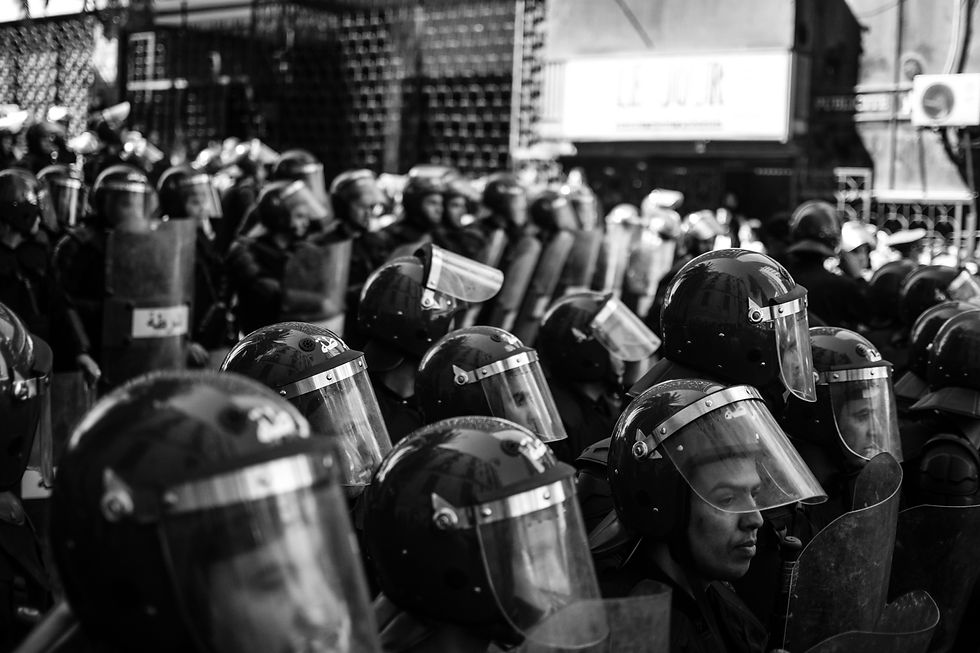
However, this has not stopped the Iranian government from using sports to control and politicise its people. In 2018, before Sahar's death, there were major-scale riots across Iran -
again protesting its government. In these protests was Navid Afkari, a professional Iranian wrestler.
Afkari was executed just four months ago, inSeptember of 2020. Afkari was falsely accused of
murder and claims to have been tortured into making a confession. This has sparked an enormous global outcry, most notably on Twitter. The hashtag #United4Navid has been spreading across the website to try to bring greater awareness to not only Navid's murder by the Islamic Republic, but also to further penalise Iran for its involvement of politics in sports.
Iranian activist and journalist Masih Alinejad has called upon numerous Iranian athletes to speak out against the abuse that the Iranian government does unto its athletes. She has compiled a large Twitter thread of videos where Iranian athletes speak openly and frankly about the abuse they have suffered at the hands of their government. Some have been exiled, some have lost their team mates to execution, and many have discussed how the Republic would force them to lose qualifying matches if it meant competing against Israel. The brutal Islamic theocracy in Iran has caused not only great suffering to its everyday citizens, but even towards its own representatives who compete on the world stage.
Fortunately, there is hope. Like the case with FIFA and international pressure surrounding Sahar's death, there is an active campaign for international sporting committees and the Olympic committee to ban Iran from competition until conditions improve. This is evocative of the famous 1964 ban on South Africa, who were banned from participation up until the dissolution of apartheid in 1992. The website UNITED4NAVID is continuing to compile the ongoing campaigns from all over the world, and there is an active petition to ban the Islamic Republic from all international sports. You can also participate in efforts to end this violation of human rights by the Islamic Republic. If external pressure is necessary to exercise change in Iran, then external pressure is what we as people should do to protect our fellow human
beings.


Comments